Last updated November 21, 2026
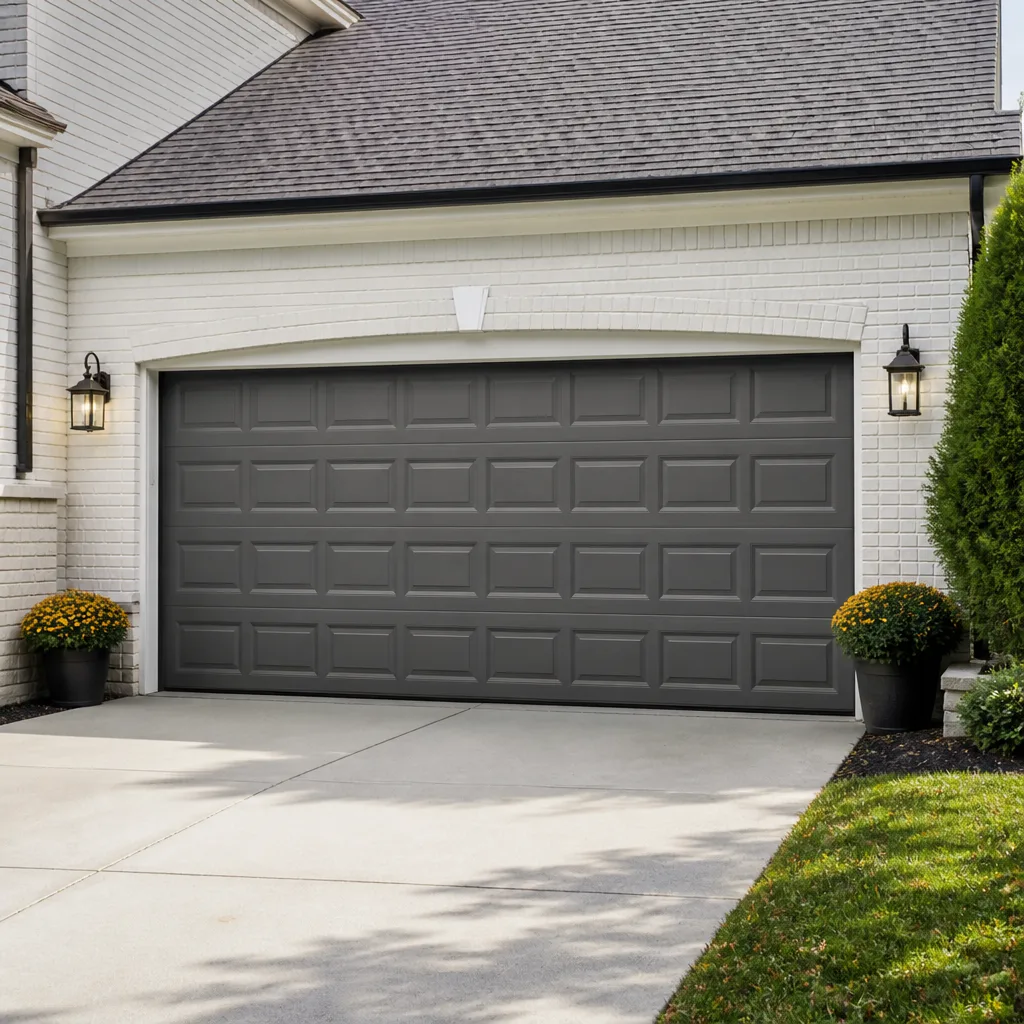 Raised-panel steel
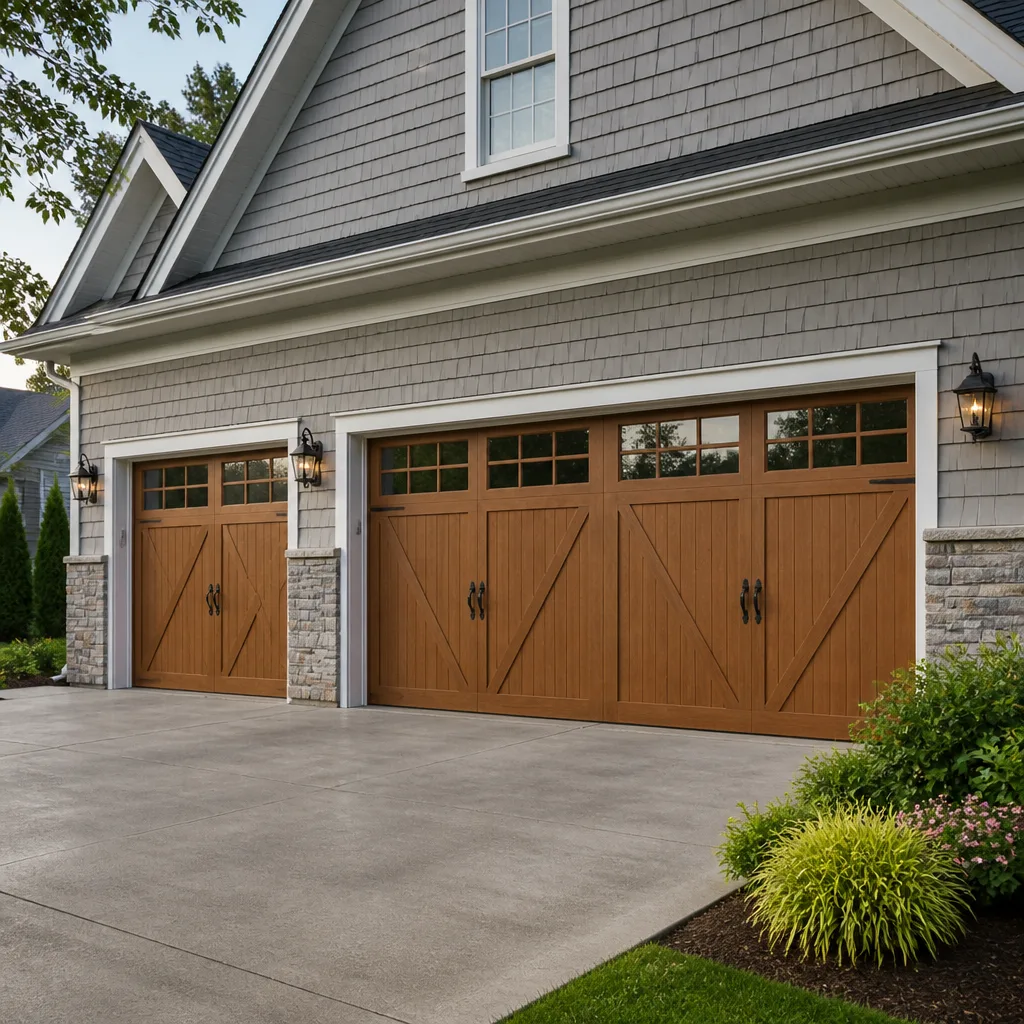 Carriage house
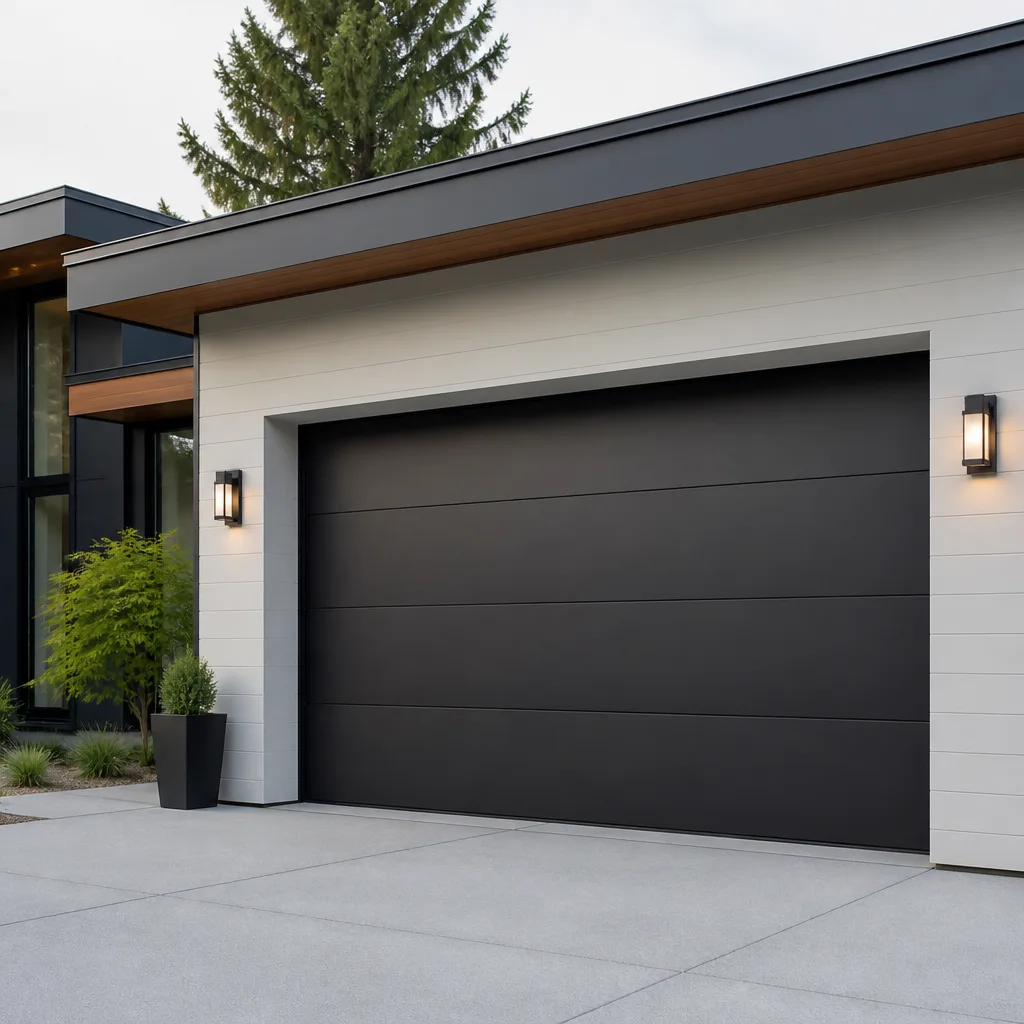 Modern flush
 Full-view glass
 LiftMaster openers
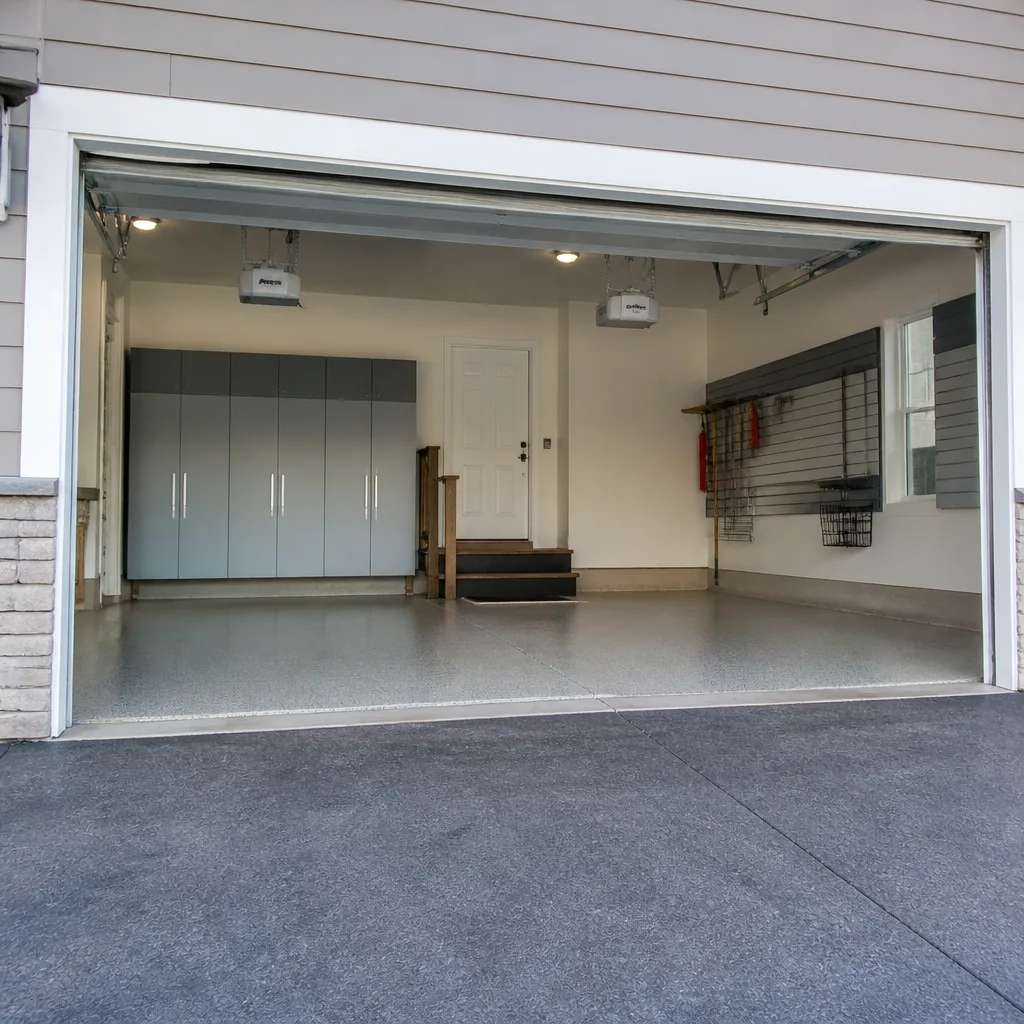 Chamberlain openers
Full 25-point door and opener safety check with every visit - springs, cables, rollers, tracks, and your LiftMaster or Chamberlain opener included
You get a price before we start. It does not change when the pro arrives.
Get your free estimateDIY vs Professional Garage Door: The Allentown Homeowner’s Decision Guide
Replacing a garage door opener yourself is genuinely manageable. Replacing a torsion spring yourself has put people in the hospital. The internet treats both tasks the same way, and that’s the problem. A search for Allentown garage door repair returns videos that blur the line between a ten-minute sensor fix and a job that can take your hand off. This guide draws that line clearly. You’ll learn which tasks are safe to handle yourself, which ones carry real injury risk or hidden failure modes, what a failed DIY attempt actually costs once you add the follow-up repair, and how to spot a tutorial filmed by someone who knows what they’re doing.
Quick Answer
Some garage door work is reasonable to do yourself: lubricating moving parts, aligning safety sensors, replacing weatherstripping, and programming a remote. The rest is not DIY territory. Torsion springs, cables, drums, and track realignment involve stored mechanical energy that can injure or kill, and a mistake often creates a second, more expensive problem on top of the first. If the fix involves the spring system or the cables, call a specialist.
Styles & brands we work with
- Raised-panel steel
- Carriage house
- Modern flush
- Full-view glass
- LiftMaster openers
- Chamberlain openers
Table of Contents
- Where is the line between DIY and professional garage door work?
- What garage door tasks are genuinely safe to do yourself?
- Why spring, cable, and track work is not DIY territory
- What does a failed DIY repair actually cost in Allentown?
- How to tell an accurate tutorial from a dangerous one
- The one question to ask before any garage door task
- What Allentown homes and weather mean for your door
- Common Mistakes to Avoid
- When to Call a Professional
- Frequently Asked Questions
Where is the line between DIY and professional garage door work?
The line runs along one question: does the task involve the springs or the cables? If it doesn’t, there’s a good chance you can handle it with basic tools and a little patience. If it does, stop. Springs and cables store energy, and releasing or adjusting that energy without the right training and tools is where most serious garage door injuries happen.
So the real dividing line isn’t skill. Lawn care, painting, and caulking all involve skill you can build over a season. Garage doors are different because the dangerous tasks punish a first attempt immediately. There’s no learning curve on a torsion spring. Either you understand how to control the stored tension or you’re guessing.
A useful way to sort tasks:
- Safe for most homeowners: lubrication, sensor alignment, weatherstripping, remote programming, tightening visible bolts, cleaning the light lens.
- Possible with care: replacing a worn roller or hinge, checking balance, adjusting the opener’s force or travel limits.
- Professional only: torsion spring replacement, extension spring replacement, cable replacement, drum work, track realignment, panel replacement, opener motor replacement, new door installation.
We’ve seen the pattern enough to trust it. When an Allentown homeowner calls after a DIY attempt, it’s almost always from the third column. The call is not just about finishing the job. It’s about undoing what the attempt left behind. Sometimes that’s a bent track. Sometimes it’s a door stuck open, exposed to a house that’s sitting empty.
What garage door tasks are genuinely safe to do yourself?
Four tasks cover most of the DIY-worthy garage door work, and all four are low on stored energy. Here’s how each usually goes.
1. Lubrication
Apply a garage door lubricant, not WD-40, to the hinges, rollers, and the length of the torsion spring (once, not repeatedly) and to the opener’s rail. Wipe the old grease off first. A door that’s been squealing in Allentown’s cold months usually quiets down after one proper lubrication session. Do this a couple of times a year and you’ll add life to the moving parts.
2. Safety sensor alignment
If the door goes up but won’t come down, or reverses a few inches off the floor, the safety sensors at the bottom of the tracks are usually the cause. Both sensors have a small LED. If either is off or blinking, wipe the lens, check that the brackets aren’t knocked out of line, and make sure nothing is hanging in the path. A straight edge, a careful hand, and a couple of minutes usually solve it. Do not bypass the sensors. They exist to stop the door on a person or pet.
3. Weatherstripping replacement
The rubber strip along the bottom of the door takes a beating from Allentown summers and the freeze-thaw cycle. If you can see daylight under the door or it lets cold air in, a new bottom seal slides into the aluminum retainer. Cut it to length, feed it in, and trim the excess. Threshold seals at the floor and side seals on the frame follow the same principle.
4. Remote and keypad programming
Most LiftMaster, Chamberlain, and Craftsman openers can add a remote or change a keypad code in under five minutes. The model number is usually on the opener’s back panel or under the light cover. Find the manual online, press the learn button, and hold your new remote. This is the most common call we get that a homeowner could have handled themselves.
Why spring, cable, and track work is not DIY territory
A torsion spring holds enough energy to lift a door that can weigh hundreds of pounds, and it’s under that tension all day, every day, waiting. When it releases suddenly, the force is enormous. This is the plain fact that makes spring, cable, and track work professional-only. Not caution, not cleverness. Force.
Here’s what each of those jobs actually involves, and why handling them yourself is a bad idea.
- Torsion springs: mounted horizontally above the door and wound to a specific number of turns. Getting the door to balance requires adjusting the tension while the spring is loaded. A spring bar slipping out of a wound spring is the classic injury.
- Extension springs: mounted along the top of the horizontal tracks. They need containment cables so that when one fails, the spring doesn’t fly across the garage. Replacing them means removing tension first, which is not a visual task.
- Cables: under tension from the spring system and threaded through the drums at the end of the torsion bar. A cable that slips off the drum is a fast-moving metal whip. Too many homeowners have tried to correct this by hand.
- Track realignment: a bend in a track can look minor, but the door travels along that line under load. Pushing the track back with a mallet can bend a bracket, stress a panel, or put the door out of level. Usually the problem is a symptom of something else, and a professional has to find the something else.
There’s a second reason these jobs need a professional, beyond the injury risk. A failed torsion spring replacement can also damage the drum, the bar, or a panel. What starts as a single repair becomes several. That’s the hidden failure mode. The dangerous tasks are dangerous in two ways: they can hurt you, and they can quietly wreck a part you weren’t thinking about.
If the door is stuck open or the spring has snapped and you can’t move the door, an garage door repair visit is the right call. We handle spring replacement as a standard service. It’s one of the most hazardous residential repairs there is, which is exactly why it belongs to someone who does it every week.
What does a failed DIY repair actually cost in Allentown?
Here’s the part most DIY guides skip. The cost of a failed attempt is not the cost of the parts. It’s the cost of the parts plus the service call that fixes both the original problem and whatever your attempt made worse. That second number can be several times the first.
Picture the typical sequence:
- Homeowner buys a replacement spring or a repair kit.
- The old spring comes off, or the attempt leaves it partially wound.
- The door won’t sit level, a cable slips a drum, or a track bends under the strain.
- Now a technician is diagnosing two problems, not one.
To make the comparison concrete, here are typical estimated Allentown-area ranges for the professional version of these jobs. The written estimate sets the final price.
| Job | Typical estimated range |
|---|---|
| Torsion spring replacement (one spring) | $180 – $340 |
| Torsion spring replacement (matched pair) | $360 – $680 |
| Cable replacement | $120 – $250 |
| Track realignment | $120 – $260 |
| Opener repair | $100 – $280 |
Springs are usually replaced in matched pairs, because both wear at the same rate. That’s why the pair sits at about twice the single-spring price. A homeowner who replaces one spring and leaves the other is often back in front of the same decision a few months later. The pair job is the honest recommendation, not the upsell.
Now add up a failed attempt. Say someone tries a single spring job and bends a track in the process. That’s the pair price plus track realignment, and the door may sit in the balance for a day or two in between. The “savings” evaporate. This is the false economy the whole debate turns on. There are no public prices for the injury side of the equation, but the cost of a hospital visit dwarfs any repair.
When you do call, the number you get is the number you pay. We quote and agree on the price before any work starts. That matters here because the reader’s second fear, right after the breakdown itself, is an invoice bigger than expected. A written estimate removes that fear.
How to tell an accurate tutorial from a dangerous one
Most garage door videos on the internet are shown by people who’ve never repaired a door in their life. Some are filmed by people who know exactly what they’re doing. The difference shows up in the first minute, and you can learn to spot it.
Watch for these signs of a trustworthy tutorial:
- They name the tools before they start. A real technician lists winding bars, C-clamps, and a proper ladder. If the video shows a screwdriver or a pair of pliers as a substitute for winding bars, close it.
- They warn before they act. Good tutorials pause and say exactly why a step is dangerous. Dangerous ones rush the riskiest part and skip the warning.
- They mention model and brand. Genuine instruction references the specific equipment. If a video claims a universal method for every door and every spring, it’s a red flag.
- They show a finished, tested door. A tutorial that ends with a working door, a balance check, and a working safety reverse is doing the job right. One that ends with “and that’s it!” and no test is not.
- They don’t turn a risky job into content. If the video’s thumbnail is a homeowner dangling from a torsion bar, that’s the wrong signal, no matter how confident they sound.
One more filter: does the video explain the second problem? A tutorial on spring replacement that never mentions the drum, the lift cables, or how the door will balance after the change is incomplete. A tutorial that admits those risks and still walks you into them is worse. A responsible video on the safe topics, like weatherstripping or sensor alignment, is fine. A responsible video on the dangerous topics usually says “call a professional” partway through.
The one question to ask before any garage door task
Before you pick up a single tool, ask: “What breaks if I get this wrong?” That question sorts every task in front of you, because it forces you to think about the failure, not the fix.
Answer it honestly by walking through three outcomes:
- What happens to me? A lubrication job gone wrong means a squeaky door. A spring job gone wrong means an injury. That’s the most important answer, and it’s usually obvious in two seconds.
- What happens to the door? If a mistake can bend a track, warp a panel, burn out an opener, or snap a cable, the repair cost jumps. Small jobs fail small. Big jobs fail big.
- What happens to the house? If the door ends up stuck open, the garage is open to the street until it’s fixed. For an Allentown homeowner headed to work in the morning, that matters. The house is exposed until someone can get there.
If all three answers come back small, do it yourself. If any one of them comes back serious, that’s the line. Most homeowners find the question oddly clarifying. It turns a vague gut feeling into a list, and the list usually says exactly what to do.
Include your own safety in that check. A bad call on a garage door isn’t a lesson learned. It’s an injury that can cost weeks and thousands. The most honest answer to “what breaks?” on a spring is not a part. It’s you.
What Allentown homes and weather mean for your door
Garage doors in Allentown live a specific life. The Lehigh Valley runs hot and humid in summer and drops into hard freezes in winter, and a door that goes through those swings year after year takes more wear than one in a mild climate. Allentown’s neighborhoods hold a lot of older housing stock, and plenty of those homes still have garages fitted with doors that were built for a different era of home construction.
What that means for the DIY decision:
- Seals fail faster than you expect. The bottom seal on an Allentown door usually needs attention every few years, and it’s one of the easiest tasks on this list.
- Lubrication season is twice a year. Give those moving parts a pass before the first freeze and again when the thaw comes. Cold weather turns a neglected hinge into a frozen one.
- Older doors mean older openers. If the garage was built decades ago and the opener is a Craftsman or Raynor that’s still on its first remote, it may be closer to the end than it looks. Remote programming on that hardware is still manageable; motor replacement is not.
- Older doors also mean springs that may already be worn. A door that feels heavy lifting by hand, or hangs a few inches off the floor, is telling you the spring isn’t doing its share. Don’t address that by adjusting the spring yourself.
Older housing also means older doors that may involve permits. Most municipalities require a permit when a new door or opener is installed, so ask Allentown’s building department about the current requirement before any installation work begins. If you’re weighing repair against replacement, garage door installation work is a measured, scheduled job, not a same-day repair, and it starts with a free measure and a written price.
We also see opener trouble that comes down to the brand. A LiftMaster or a Wayne Dalton opener has a different set of quirks than a Genie, and a general handyman who’s never touched that model will often guess. We work on your brand, and that’s the point.
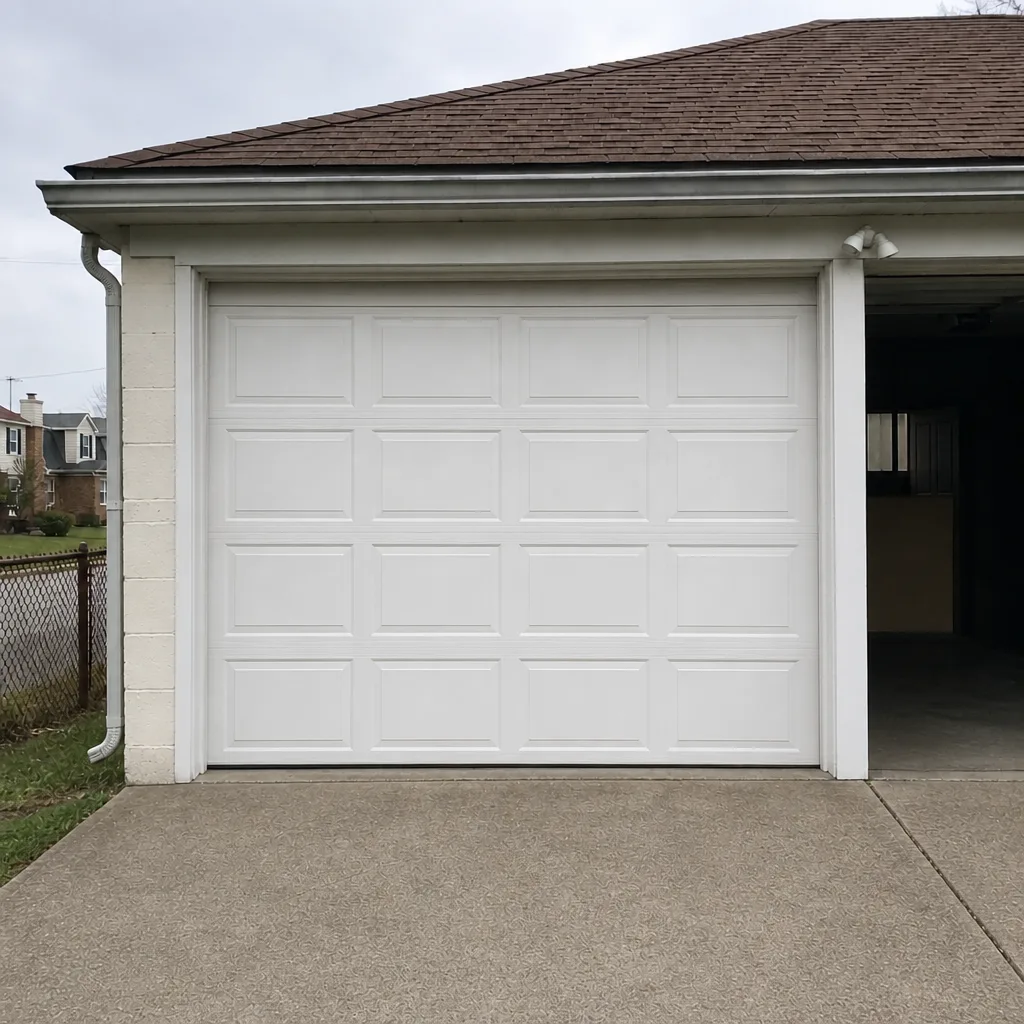
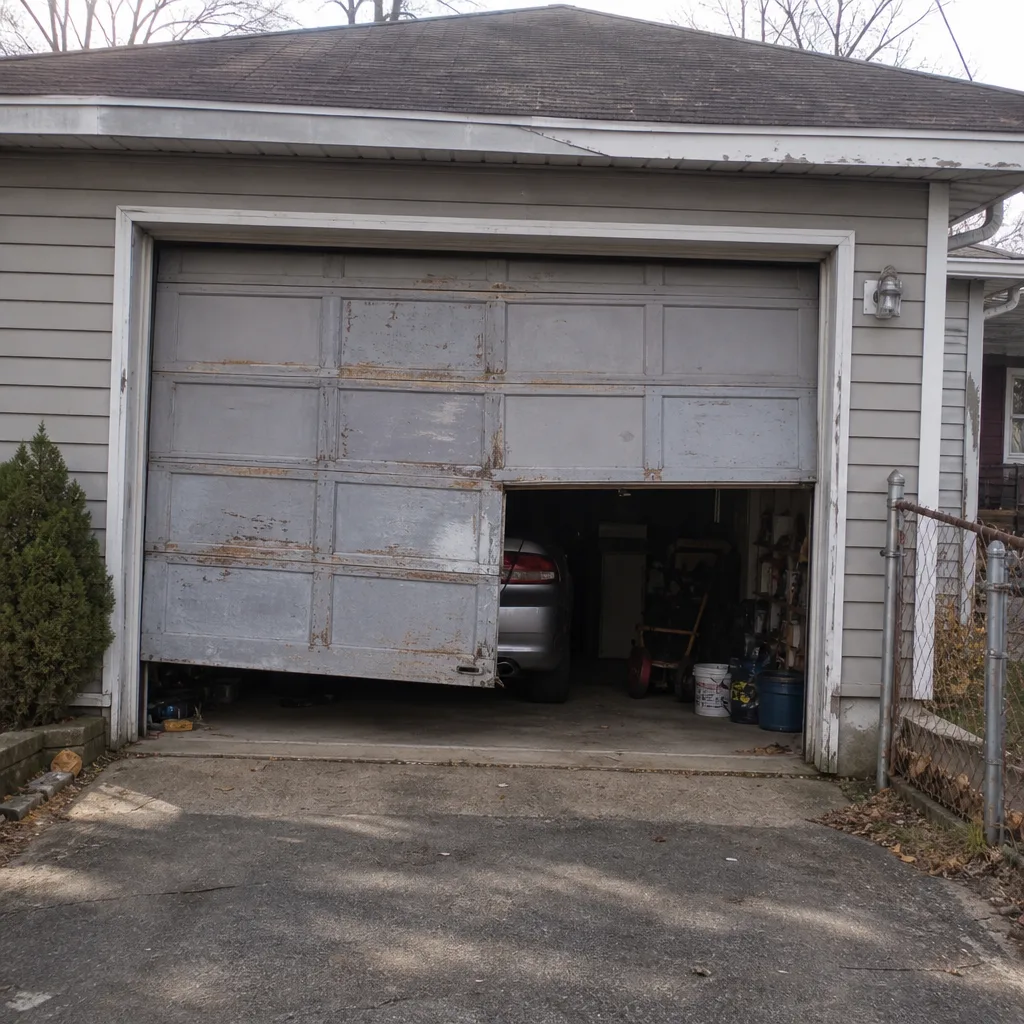
See the difference
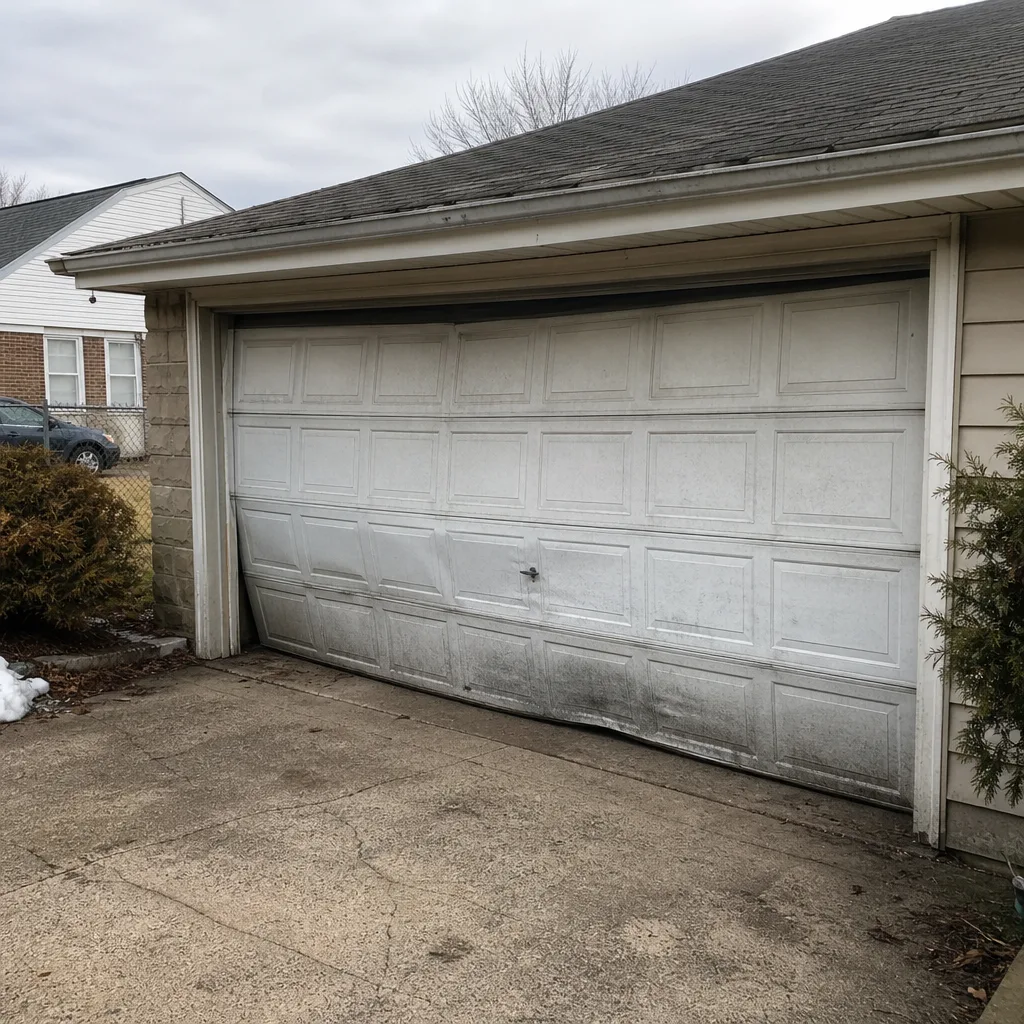 Before
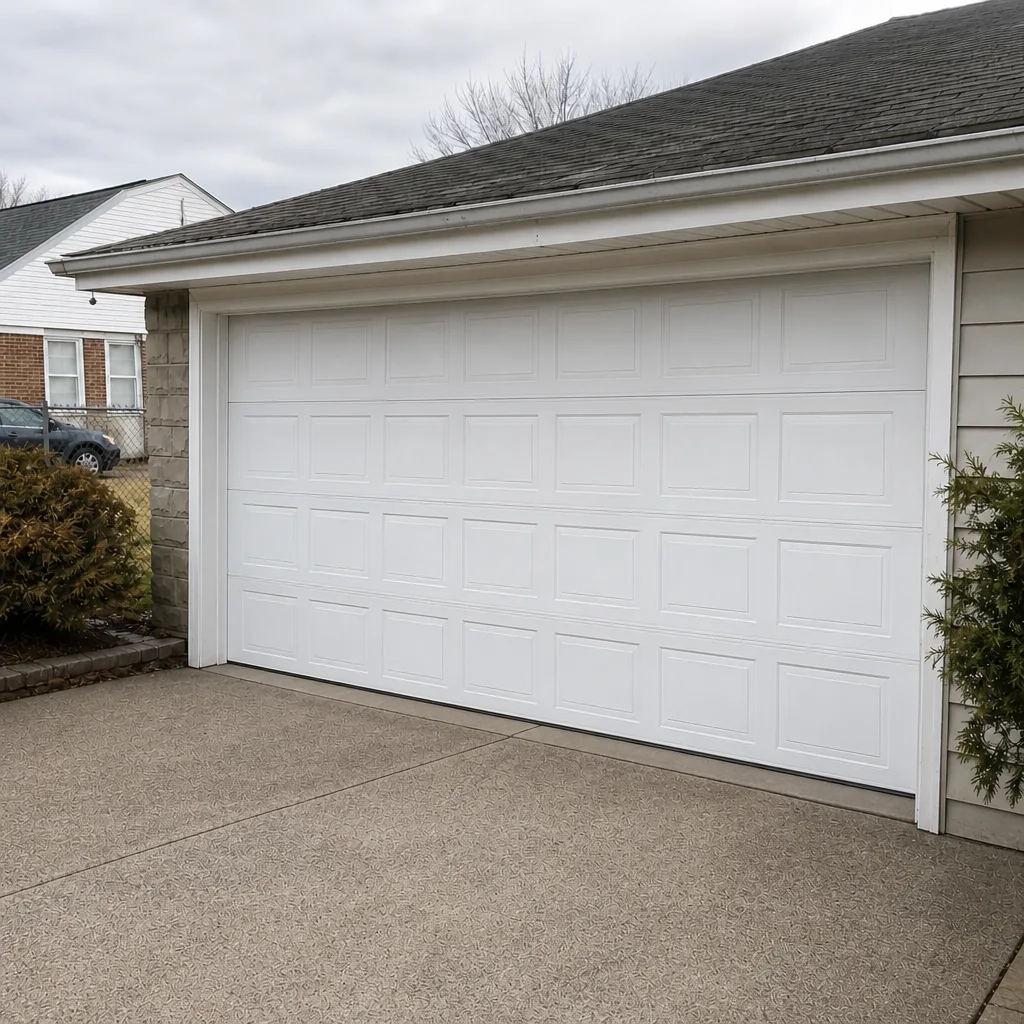 After
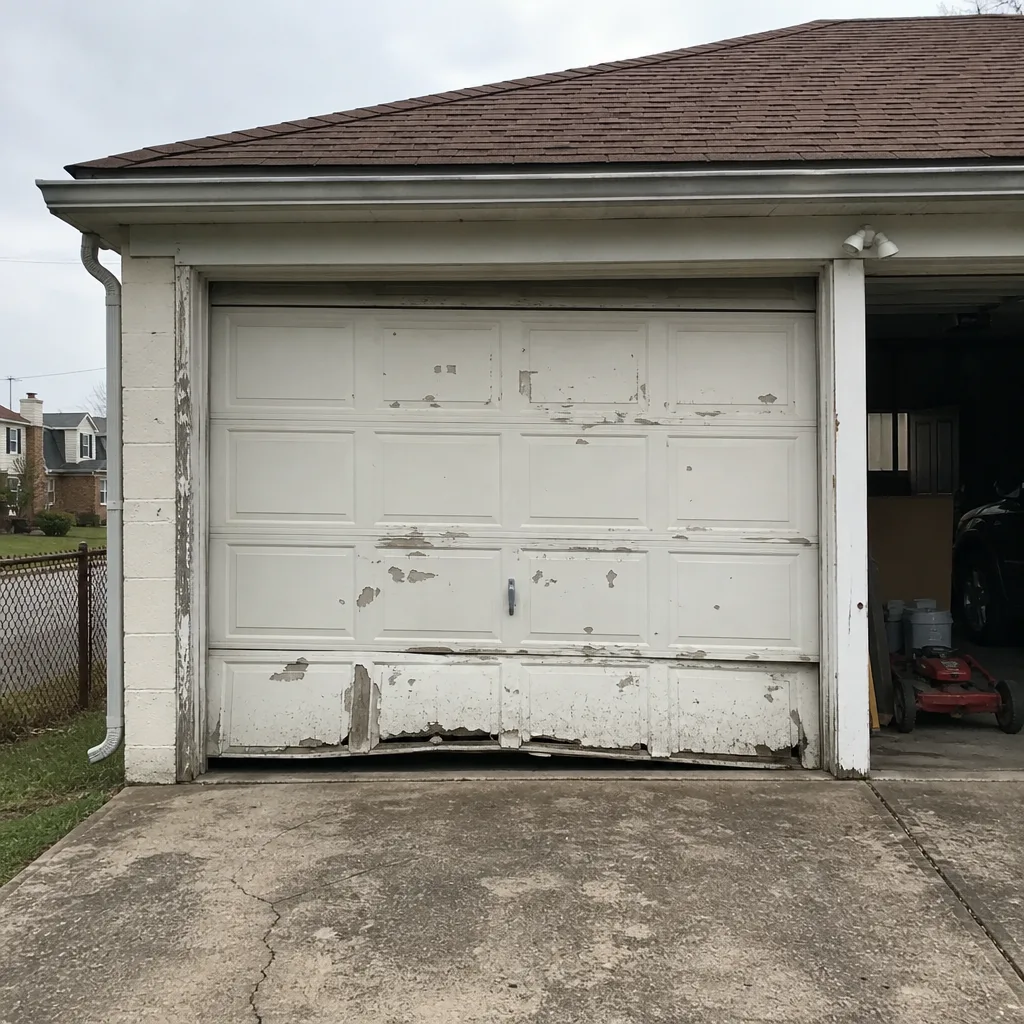 Before
 After
 Before
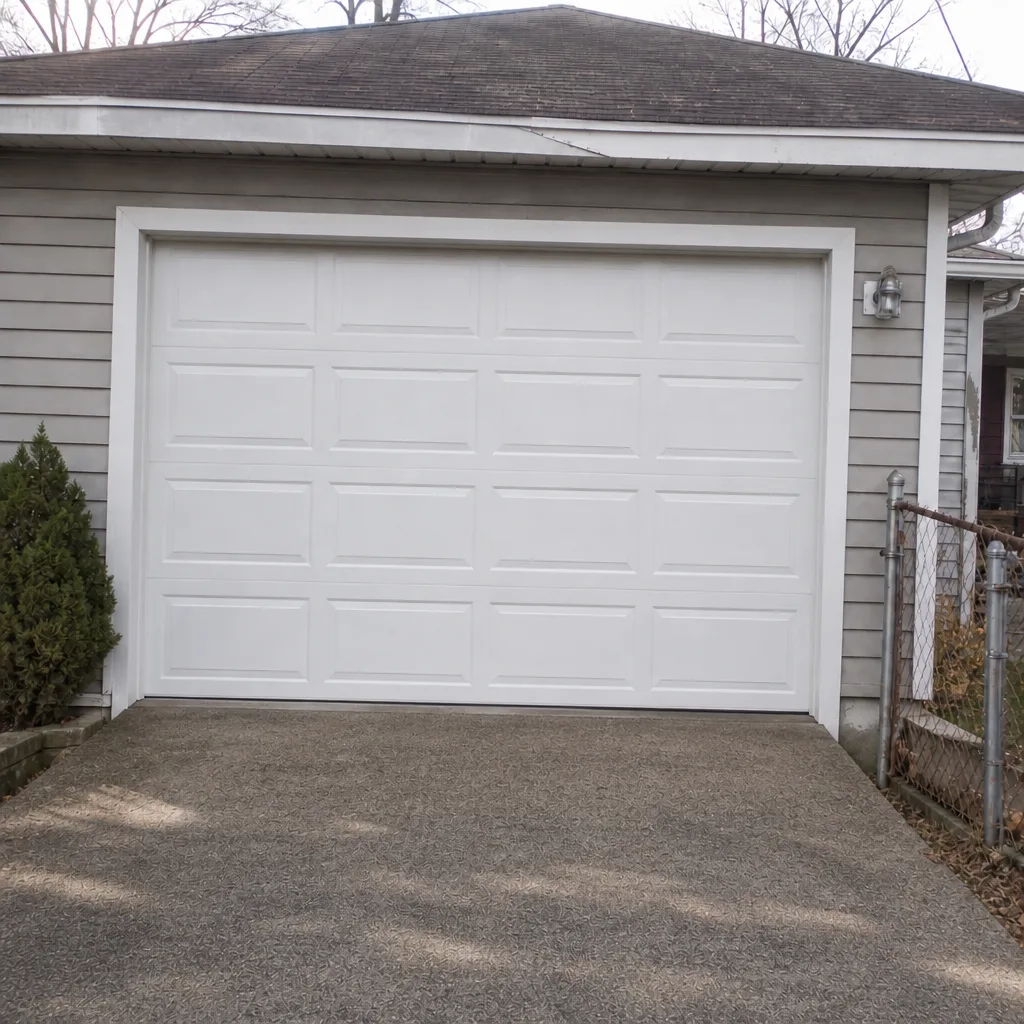 After
Common Mistakes to Avoid
- Replacing one spring and leaving the other. Springs wear at the same rate, so a single replacement usually means you’re back in the same place a few months later. Replace the pair and the door is balanced.
- Using WD-40 as a lubricant. It cleans and displaces water, and it’s not a garage door lubricant. Use the right product so you don’t dry out the parts you’re trying to protect.
- Bypassing the safety sensors. A sensor that keeps tripping is telling you something. Taping it over or rerouting it takes away the feature that stops the door on a person or a pet.
- Forcing a stuck door. Pushing a heavy door up by hand, or prying a track back with a mallet, usually bends something that needs a technician to fix. If the door won’t move normally, stop.
- Cutting a corner on a “quick” tutorial. Most bad spring videos are bad in the same way: they leave out the risk. If a video can’t explain the risk, it wasn’t made by someone who understands it.
- Ignoring a warning sign until it’s a failure. A door that’s slower to open, a remote that only works from close range, a light that flickers on the opener. These are cheap diagnostics now and expensive repairs later.
- Quoting “typical” numbers from out of town. Allentown is not a big-city market, and it isn’t a small-town market either. Get an estimate from someone who works here.
When to Call a Professional
Call a professional when the task touches the spring system or the cables. Also call when the door is stuck open and the garage is exposed, when the opener runs but the door doesn’t move, when the door comes down unevenly, or when a panel is dented or bent and the door won’t track straight. If a DIY attempt left the door heavier or off-level, call before you try again. Allentown Garage Door Repair Pros offers free estimates in Allentown. Call (866) 594-2373. We’re open Sunday through Friday, 7am to 7pm, and closed Saturday. Our technicians have up to 11 years of experience, and we handle everything from garage door opener repair through spring work and full installations. Need it today? We offer same-day emergency service.
Frequently Asked Questions
No, we don’t recommend it. Torsion and extension springs hold stored energy that can cause serious injury if it releases unexpectedly, and a mistake can also damage the drum, cables, or a panel. Call a specialist for spring work. For an exact quote, call (866) 594-2373. Estimates are free.
One torsion spring typically runs $180 to $340. A matched pair usually costs $360 to $680, since both springs wear at the same rate. The written estimate sets the final price, and it’s quoted before work starts. Call (866) 594-2373 for an exact quote.
Opener replacement is at the edge of what a careful homeowner can do. The skill is not the wiring, since most units plug in. It’s the mounting, the alignment, and the force and travel settings. If you’re not comfortable with those, a technician will do it in one visit. For a quote, call (866) 594-2373.
Yes, we offer same-day emergency garage door service for doors stuck open, off their tracks, or with a broken spring. We’re open Sunday through Friday, 7am to 7pm, and closed Saturday. Call (866) 594-2373.
No. We quote and agree on the price before any work starts. The written estimate is the price for the agreed work. If we find something that changes the scope, we tell you before we touch it. For a free estimate, call (866) 594-2373.
Yes. The local pros we connect you with are licensed and insured as their state requires. For a quote and a look at the fail point, call (866) 594-2373.
Look for the warning before the risky step, the named parts, the specific tools, and a finished, tested door at the end. If the video leaves out the risk or substitutes a pliers for a proper winding bar, close it. Call (866) 594-2373 if you want a technician’s opinion before you start.
The Bottom Line
DIY vs professional for garage doors is not about capability. It’s about which tasks carry injury risk or hidden failure modes that turn a small repair into a large one. Lubrication, sensor alignment, weatherstripping, and remote programming are yours to handle. Springs, cables, drums, and track realignment are not. Ask “what breaks if I get this wrong?”, answer it honestly, and you’ll know which side of the line you’re on. When you’re on the wrong side, the call is quicker and cheaper than the workaround. Allentown Garage Door Repair Pros covers both sides of the market, from a busted spring to a brand-new door, with no guesswork and no runaround.
If you’d rather not sort it out alone, call (866) 594-2373 for a free estimate. We’re open Sunday through Friday, 7am to 7pm, and closed Saturday. Same door, same day when the job calls for it, and a written price before anything starts. Whether it’s a repair today or a plan for the door’s future, that call is the shortest path.
Written by the team at Allentown Garage Door Repair Pros.